| China Trip 2008 - Dragons on The Silk Road |
|
|
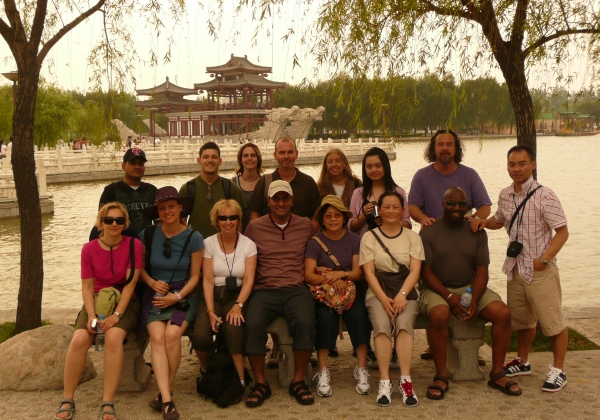
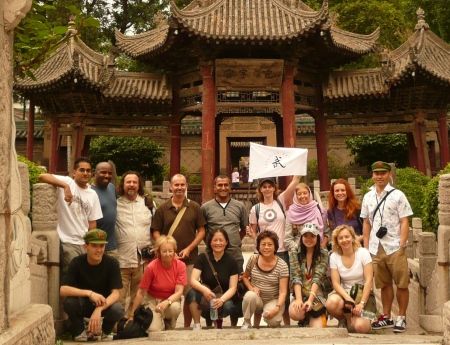
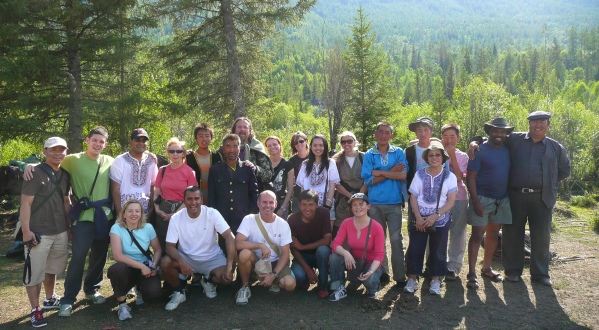
This year fifteen Dreaming dragons set out from Heathrow for the fifth of our annual excursions to China with Master Huang Ping, Master Zhao Junhui and their daughter Si Yu. For some it was their first trip; the rest were old hands!
|
|
Our destination was part of the ancient trade route between China and the Mediterranean sea - known as the Silk Road
|
|
This ancient trade route starts in the old capitals of Luoyang and X’ian, reaches the Yellow River at Lanzhou, follows along the "Gansu Corridor" and stretches along the edge of deserts and mountains. Before the discovery of the sea route to India, the Silk Road was the most important connection between the Orient and the West. As it extends westwards from the commercial centers of North China, the continental Silk Road divides into north and south routes to avoid the great Central Asian deserts, the Taklamakan and Lop Nur.
|
|
The northern route travels northwest through the Chinese province of Gansu, and splits into three further routes, two of them passing north and south of the Taklamakan Desert (through modern day Kyrgyzstan and Xinjiang) to converge at Kashgar; the other going north of the Tien Shan mountains through Turfan, Talgar and Almaty (in what is now southeast Kazakhstan).
|
|
A route for caravans, the northern Silk Road brought to China many goods such as dates, saffron powder and pistachio nuts from Persia; frankincense, and myrrh from Somalia, sandalwood from India, glass bottles from Egypt, and many other expensive and desirable goods from other parts of the world as well as Buddhism, Islam and Christianity . In exchange, the caravans sent back bolts of silk brocade, lacquerware and porcelain.
|
Friday 11th July
|
|
Our flight to Shanghai took us over Scandinavia and Russia and then Mongolia - some of which was lunar-like, barren desert. Jupiter was clearly visible in the night sky. We flew on to Xian, capital of Shanxi province. Called Chang’an in ancient times, it was the capital city of the Western Zhou ( 11th C - 771 BC ), Qin ( 221 - 206 BC ), Western Han ( 206 BC - 24AD ) and Tang (618 -907AD ) dynasties.
|
Saturday 12th July
|
|
We arrived in the evening and strolled around the night market, which was very busy with food stalls, shops and tea houses , noisy, vibrant and colouful.
|
Sunday 13th July
|
|
|
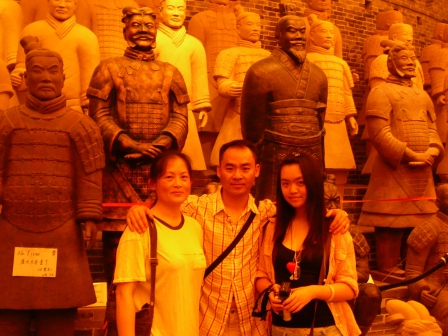
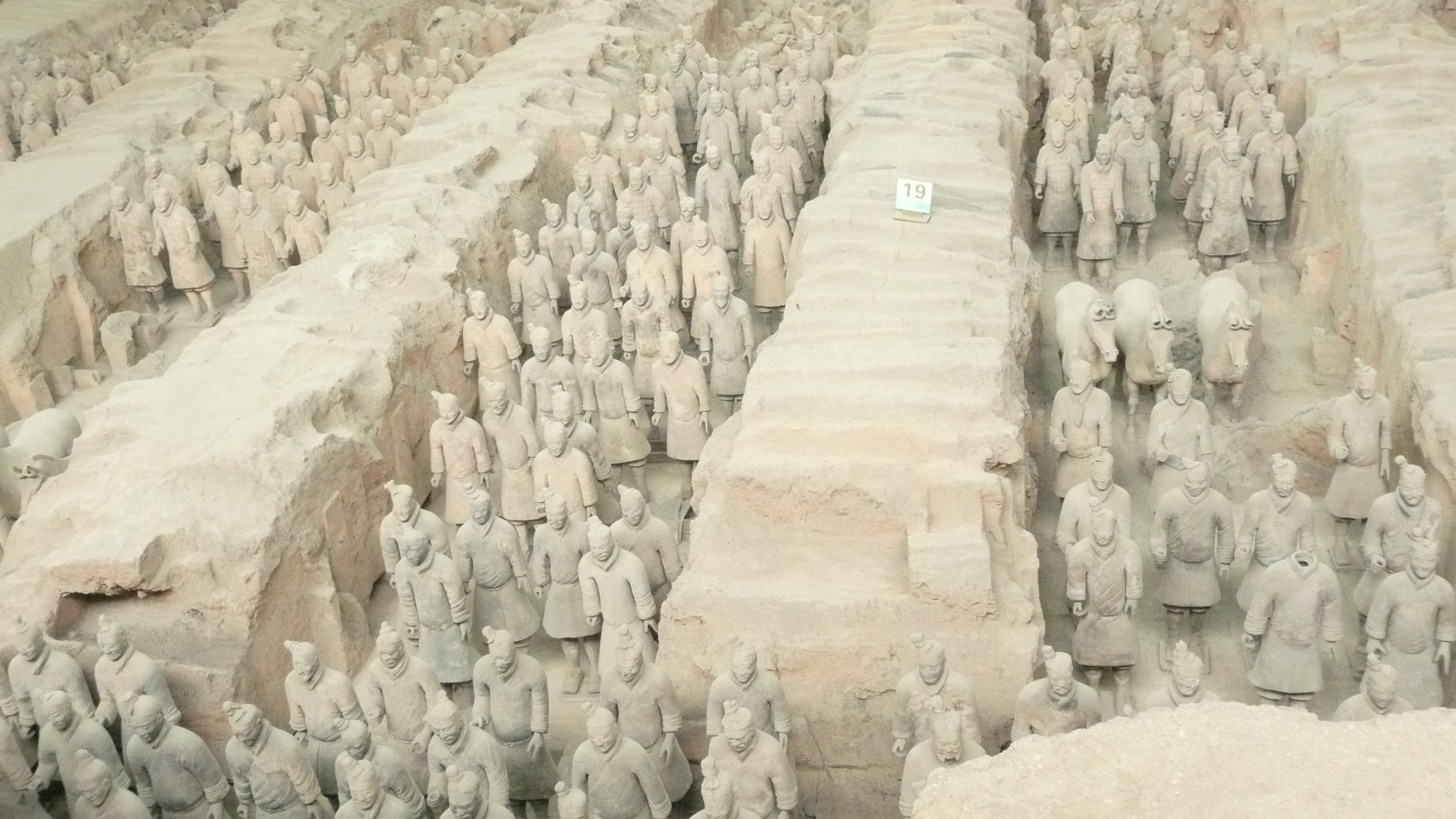
Next day we visited a factory selling reproductions of terracotta warriors and saw how they were made. A huge collection of laquered furniture, screens and silk rugs filled the showrooms. The Terracotta Army is housed in a vast hangar-like structure which covers the pit where they look as if they are marching to war. |
|
| The viewing gallery runs along all four sides of the building and over a thousand foot soldiers, horses and chariots could be seen just as they had been excavated. An extraordinary sight, with many more still lying buried in the earth . Over 720 workers were killed to preserve the secrecy of the site, the manifestation of one emperor’s 30 year grip on power! |
|
|
| In the afternoon we visited Paradise Park. where lawns, waterways, lakes and bridges surround new buildings, built in the traditional style and hung with large red lanterns. We watched a show celebrating the Tang dynasty, followed by a wonderful dinner which included dumplings and light soup made with lotus seeds - then crawled off to our beds! |
|
|
Monday 14th July
|
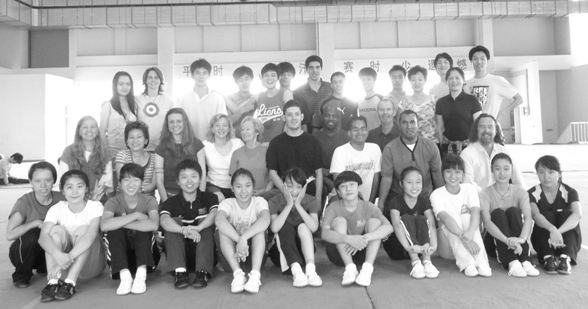
| A visit to the Wushu team’s sports hall - a thrilling experience watching these young people, supreme exponents of their art, as they gave a demonstration for us. |
|
|
|
|
We then visited a jade factory where we saw how it is carved, then on to a Muslim temple, an old, traditional Chinese building surrounded by tree-lined courtyards and small, carved wooden pagodas.. Outside the mosque were tiny streets lined with market stalls selling everything from antiques to clothes and shoes. |
|
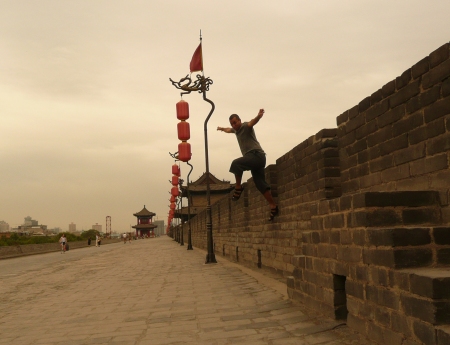
| From there we went up onto the city wall built during the Ming Dynasty (1368 - 1644 AD ). It is the largest and most intact Ming Dynasty castle in the world. Some of the more energetic members of our group rode tandems along the (14km) wide pavement running all the way along the top. There was some muttering about people not doing their share of pedalling - but I’m sure that wasn’t true! We were treated to a foot massage after dinner - which everyone enjoyed, well there was certainly plenty of laughter... |
|
|
Tuesday 15th July
|
| We flew to Dunhuang, situated on the common boundary of Gansu, Qinghai and Xinjiang provinces and not far from th Taklamakan desert whose name means “ Go in, not come out”. Dunhuang is an attractive city, at night its buildings and trees are strung with coloured lights. Its ancient name was Sha Zhou - meaning Beautiful Desert Oasis - and it was the most important trading city of the middle and eastern silk routes. |
|
|
|
|
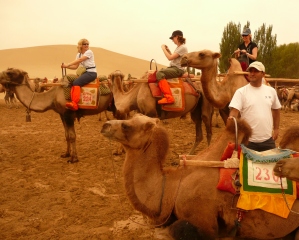
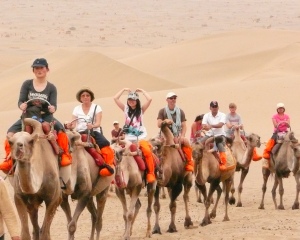
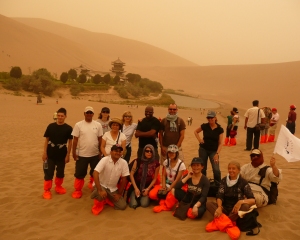
| As soon as we arrived in Dunhuang we headed to the desert for a camel ride across the dunes. At one point all we could hear were the bells tied around their necks, their breathing and the sound made by their feet on the shifting sand - like music. I wanted to close my eyes and listen to it, but was worried about falling off! . |
Wednesday 16th July
|
|
|
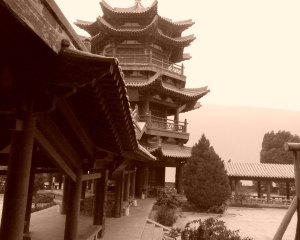
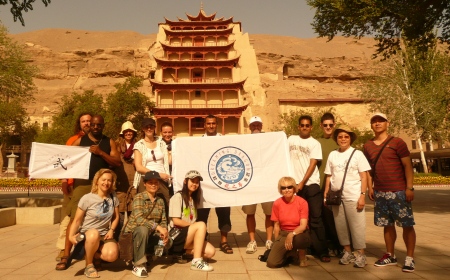
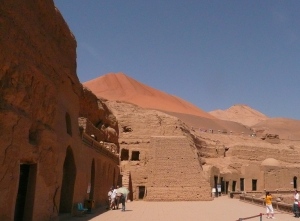
Next day we visited the Mogao Caves, made by Buddhist monks, about 25 km southeast of the town and consisting of 492 grottoes. The first caves are said to have been built by the monk Lezun in 366 AD and the last ones were carved out at the time of the Mongolian conquest in 1277. They are exquisitely painted with rich colours and symbols, some have huge buddhas carved from the rock. |
|
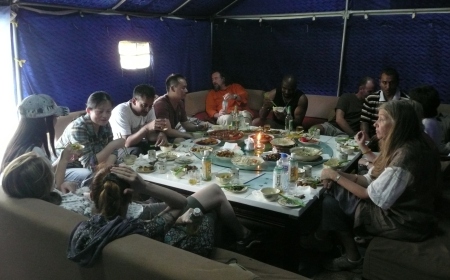
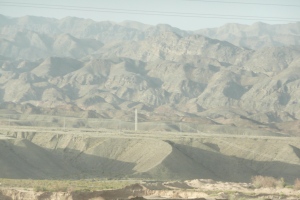
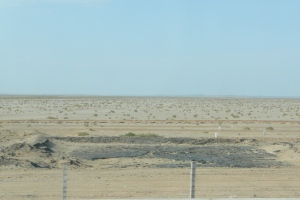
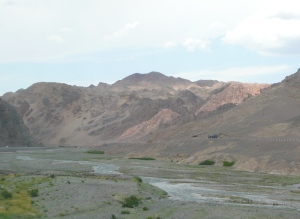
| We lunched in a large tent reminiscent of those in North Africa with sofas around a large table, beautiful food, as always. We then set off for a 5 hour journey by coach to Jiayuguan, Gansu province, an outpost at the North Western end of the Great Wall, so, historically, of great strategic importance. It was much cooler there than in Dunhuang (which was 40 deg ) we could see the QiYi glaciers in the distance as we travelled through the barren landscape. |
|
|
|
|
Thursday 17th July
|
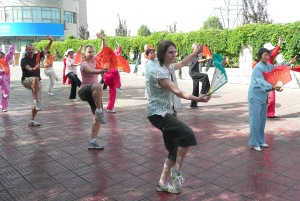
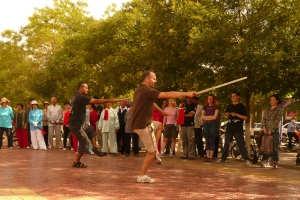
| Jiayuguan, whose main industy is metalwork, has wide, tree-lined streets and green, open spaces. On our way to one of the silk factories, Master Huang Ping saw a Tai Chi group practising sword and fan forms on the pavement so we all went to watch them - they were very good. Dipen and Paul did the sword form with them - pretty impressive! |
|
|
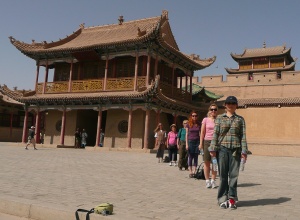
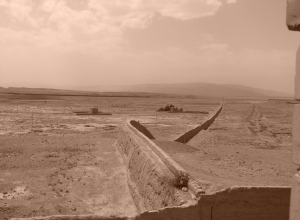
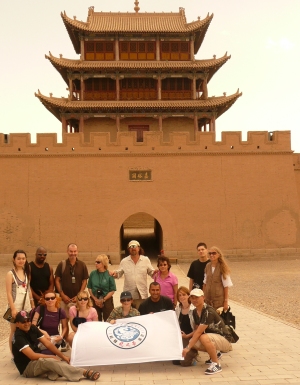
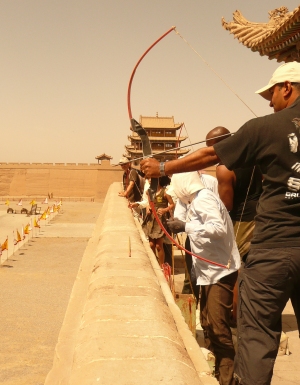
| We visited the huge Jiayuguan fort from where we could see crumbling remnants of this part of the Great Wall. Roy and Dipen tried some archery from the walls and managed to hit ( no, not a bunch of tourists !) a target below. |
|
|
|
|
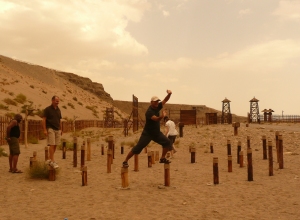
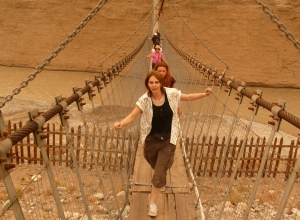
| We then went to a disused army training base - which tested the agility and balance of some of us and walked across the river on a sturdy rope bridge, not quite as hair-raising as it sounds but very Indiana Jones. |
|
|
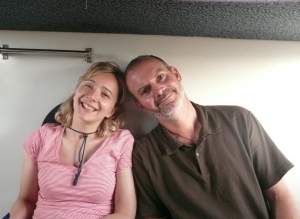
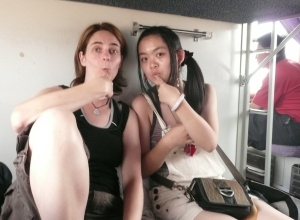
| We took an overnight train journey from Jiayuguan to Tulufan in Xinjiang Uygur Autonomous Region. The train carriages consisted of sleeping compartments, opening to a corridor. Each compartment housed six bunks, in groups of three, one above the other with a small table in the centre. An interesting journey with much movement, talking and snoring ( from the men, at least!!). |
|
|
Friday 18th July
|
| Arrived in Tulufan in the early hours with time to check into our hotel and freshen up. |
| Located in North-West China and surrounded by high mountains, Xinjiang province has three huge mountains and two enormous basins:- the Zhunkeer basin between the Tianshan Mountain and the Kunlun Mountain where the vast Taklamakan Desert is found. It covers an area of 1.6 million square kilometres, and has a population of 15.5 million. |
| We visited Fire Mountain, made famous in the Chinese classic novel, "Journey to the West", and where the surface temperature can reach over 158 deg F and the air temperature in summer reaches 118 F. It is the hottest place in China. The inhabitants of this area dug out an irrigation system called the Karez system, consisting of underground canals carrying water to a series of wells, which sustained life in this harsh area. |
|
|
|
|
We also were entertained at a vineyard with songs, dancing and given sweet grapes and melons, then visited a replica of a traditional Uygur village, whose wooden houses had wide verandas and were furnished with rich, colouful fabrics. Everywhere we went, we were greeted very warmly by the Uygur people. |
|
Saturday 19th July
|
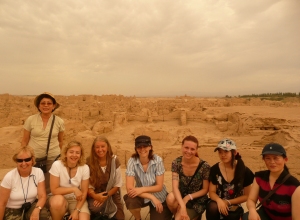
| This morning we travelled to Jiaohe Ancient city, situated on a plateau 30 metres high between two rivers, it is the largest and best-preserved earthen city in the world covering an area of 220,000 sq. metres. It was the capital of the state of Cheshi; according to historical records it was home to approx. 6,500 people and 865 soldiers during the Tang dynasty ( 618 - 907 AD ) Its grand, main Buddhist temple dominates the rest of the buildings and one can still see the street grid and the burial places on the edge of the city. It is easy to imagine the people, camels, horses and all the noise and activity of a thriving city. Jiaohe City’s strategic importance due to elevated position, water supply and fertile land, meant that it was continually fought over. Finally destroyed by the Mongols and abandoned in the 14th Century. |
|
|
| In the afternoon, we set off by coach to our next destination. After a long coach ride through diverse terrain, we arrived at the imposing city of Urumqi, the capital of the Autonomous Region, with its many monumental high rise office blocks and apartments. |
|
|
|
|
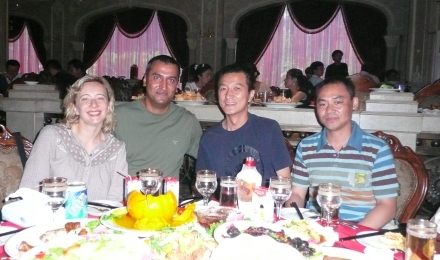
An invitation from one of Master Zhao Junhui’s former students, Cao Ming, took us to a restaurant on a grand scale. Dark, wooden carved chairs around tables groaning with an amazing and varied array of dishes and a stage. |
|
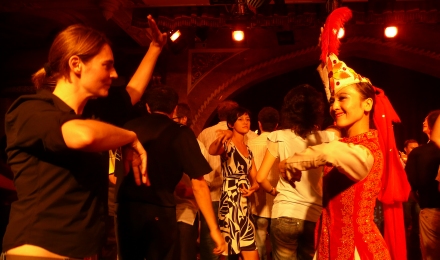
| We were entertained by dancers and singers - some with a more Russian flavour than Chinese with cossack-style dancing. We all got up at some point and joined in the dancing - and we have many a photographic record to prove it! |
|
|
Sunday 20th July
|
| Next morning was for shopping - as we had come to expect in all China’s large cities, the variety and quality in the shops was superb. We visited a big, indoor market, had dinner and saw a show before turning in. |
Monday 21st July
|
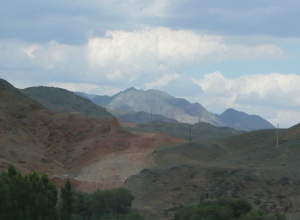
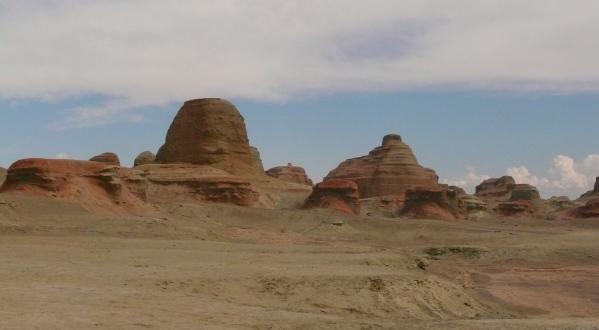
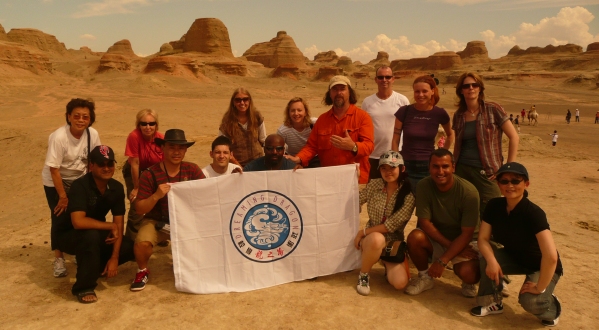
| Long coach journey ( 11 hours ) North towards Kanas near the border with Outer Mongolia. The landscape always changing - from barren deserts to oases back to desert, oilfields and windfarms. on the way we saw a ‘ghost city’ with rock formations resembling those of the Grand Canyon - but on a smaller scale, though still very impressive. They are so-named because the winds moves through them and makes sounds like human voices. |
|
|
|
|
| We stayed in an excellent hotel in Buerjin county in a small, attractive town with clear air and a cooler temperature where we strolled around after dinner. |
Tuesday 22nd July
|
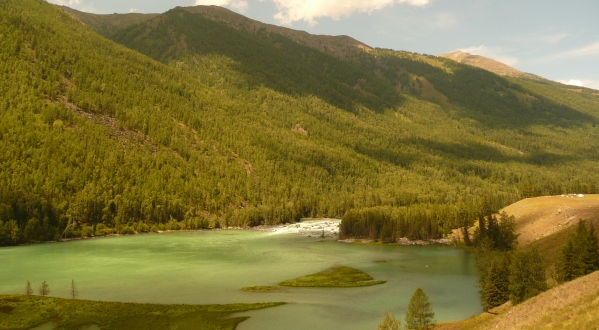
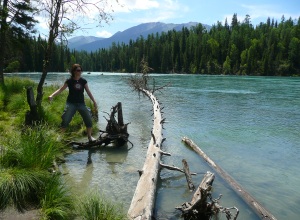
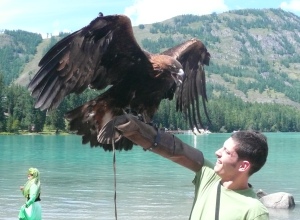
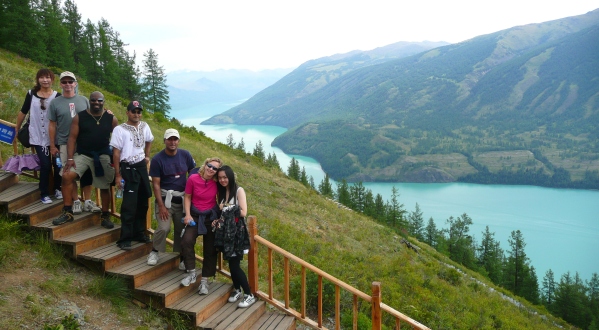
| By coach to Kanas, huge, open pastures with cattle and horses and, beyond, the spruce-covered mountains . So many shades of green beneath a bright blue sky. In the pastures there were small groups of Yurts, the felt-covered circular tents which are home to this nomadic people. The rivers and lakes are turquoise and the water is clear and pure. These scenes reminded us of Switzerland and, after the vast deserts, were a feast for the eyes. |
|
|
|
|
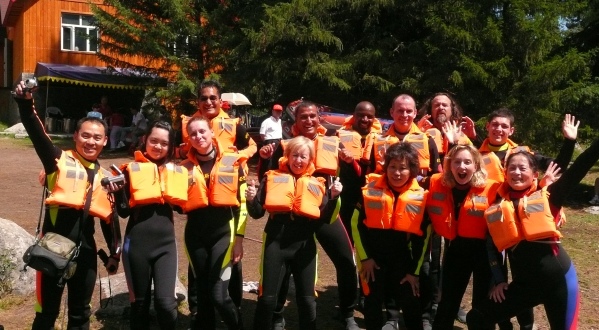
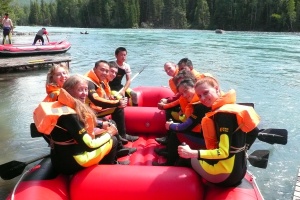
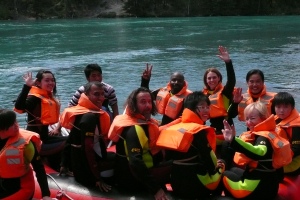
| We arrived and changed into wetsuits - very fetching! - for a white-water rafting journey. It was quite gentle, the mountain water sparkled and the banks were lined with trees. We could feel the sun’s heat in the pure air. |
|
|
|
|
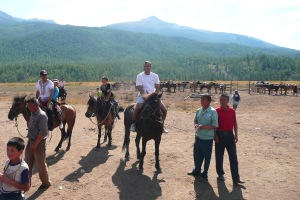
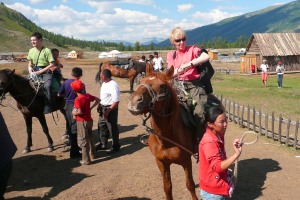
| After the river came the wild-flower meadows and the pasture land where we went riding with the Kanas horsemen - said to have descended from the remnants of Ghengis Khan’s army, they were more Kazak than Chinese. It seemed too beautiful to be real - like a wonderful scene from ‘Hero’. We did some stargazing on the walk back to our hotel after dinner - no, we didn’t stay in a Yurt, maybe next time...... |
|
|
|
|
Wednesday 23rd July
|
| Next day we took coaches and went through Kanas village and then walked up the mountain path where there were so many flowers that are familiar from our own UK gardens. The colours were fantastic, the sun was shining and the air was loud with the sound of crickets. Afterwards we headed back to Buerjin county for the night - and a visit to the night market. |
|
|
Thursday 24th July
|
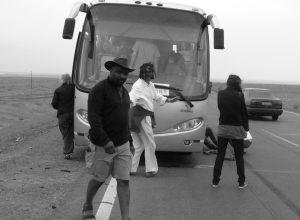
| Took another 11hr coach journey back to Urumqi. This was not without incident. First we had flat tyre on the main highway, which delayed us for an hour or so, then we were held up by a traffic jam after a dramatic accident had occurred between a truck and a large coal carrier. Some of the Dreaming Dragons found ways to keep themselves occupied during this time. |
|
|
| Eventually we arrived in time for dinner - as always. This was a special, farewell dinner in a private room where we met Cao Ming again, his wife and small daughter ( she sang the ‘Beijing Huanying Nin’ for us, having learnt it at school). An enormous cream cake arrived at the end of the meal and everyone toasted another fabulous Dreaming Dragon adventure. |
| Some of us went to bed, pretty tired , but SOME had a most interesting massage involving cucumber on the face and chocolate nearly everywhere else! Not saying any more about THAT !!! |
Friday 25th July
|
| Next day we flew our separate ways, some to Shanghai, some to Kunming and Andy and Patricia to Kashgar for further adventures. |
|
|
| It was a journey that we will all remember for years to come - and, of course, we look forward to the next one. Master Zhao Junhui, Master Huang Ping and Si Yu did a brilliant job of organising, looking after - and translating ( Si Yu did a tough job superbly)....We hope they had a well-deserved rest in Kunming before we see them again and resume classes at the end of August. |
| NOTE: If you cannot see our banner and menu options at top of the page then please click here to reload the page |
|
| © Copyright 2008 Dragon Enterprises Ltd |